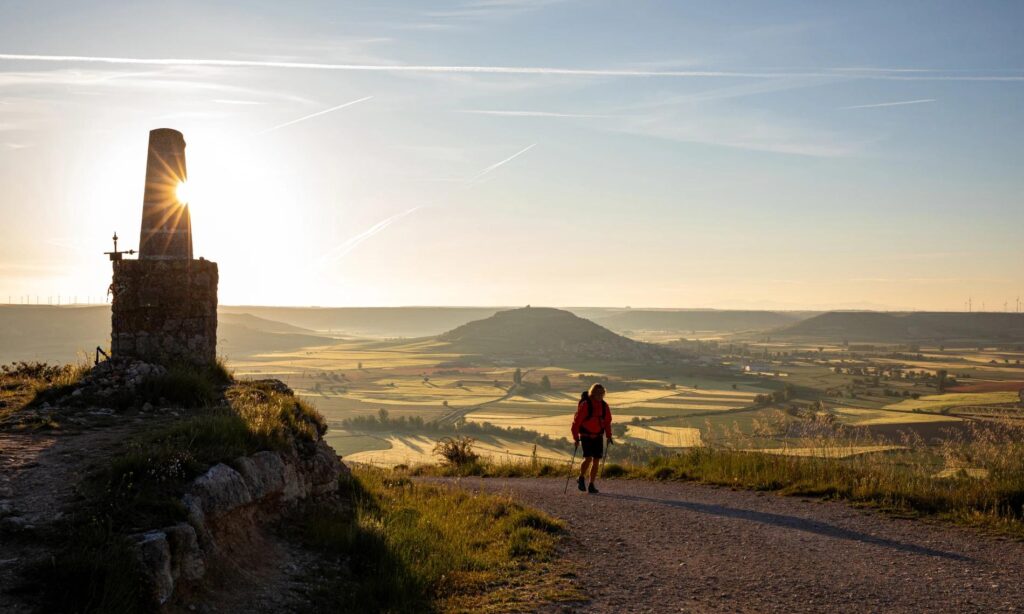
Over the years, I’ve climbed sacred mountains, stood inside ancient caves, walked medieval pilgrimage routes, and spent time in places that seemed to exist outside of time itself. In those moments, I felt expanded, awakened, and deeply connected to something larger than myself. There was a clarity that seemed effortless—a quiet knowing that life was somehow bigger, richer, and more sacred than I had remembered.
And then I came home.
The garden still needed watering. Emails continued filling my inbox. Bills still had to be paid. The laundry was waiting. Friends and family expected the same version of me they had always known. The world hadn’t changed, but I had.
When the Sacred Journey Meets Everyday Life

That disconnect can be surprisingly difficult. Many travelers experience it but don’t have language for it. After a profound pilgrimage, retreat, or journey to a sacred place, there is often a period of re-entry. The spiritual exhilaration begins to fade. The extraordinary slowly gives way to the ordinary. We find ourselves wondering how to hold on to what we experienced and how to carry it into the rhythms of everyday life.
Integration Is the Final Sacred Practice
I’ve come to believe that integration is the final sacred practice. The purpose of a sacred place is not to offer us a temporary escape from our lives. Its purpose is to prepare us to return to them differently. The real question isn’t,  The real question is, How can I become the person that place invited me to be?
If a monastery taught me stillness, can I create moments of silence before beginning my day? If walking the Camino reminded me to trust the next step instead of worrying about the entire journey, can I live that lesson when life feels uncertain? If standing beneath the stars in Chaco Canyon filled me with awe, can I pause long enough to notice the beauty of an ordinary sunrise at home?
Don’t Recreate the Experience—Embody the Lesson
The answer is not to recreate the experience. It is to embody the lesson. Feelings are beautiful, but they are temporary. Inspiration rises and falls like the tide. Transformation is different. Transformation quietly reshapes the way we think, the choices we make, and the way we show up in our relationships and in the world. That is the gift sacred places leave behind—not memories, photographs, or passport stamps, but a new way of living.

What Did the Sacred Place Awaken in You?
When people ask me what my favorite sacred place is, I often smile because I no longer think that’s the right question. A better question is: What part of yourself did that place awaken—and how are you living that truth today? Every sacred place offers an invitation. Some invite us to forgive. Others invite us to slow down, to trust, to grieve, to wonder, or simply to become more present. The journey isn’t complete when we board the plane home. In many ways, that’s when it truly begins.
As I write in The Soul’s Compass, you don’t have to go far to go deep. Eventually, every sacred place points us back to the same destination: our own lives. The monastery teaches us how to be still in our own home. The mountain teaches us courage when life becomes steep. Ancient ruins remind us that everything changes—and that this moment is precious because it will never come again.
The sacred site was never meant to become your new life. It was meant to illuminate the one you already have. Perhaps that is the true measure of any pilgrimage—not what happened while you were there, but who you become after you return. Because the journey doesn’t end when you come home. In many ways, it begins there.
The pilgrimage may end when you come home.
The transformation doesn’t.
Are you wearing the best colors for you? Each of us has a power color based on the five elements and the day we were born. Sign up for my email list and provide me with the day, month, and year of your birth, and I will send you your birth element and power color!
Want more tips on creating a meaningful life? Subscribe to my podcast, Creating a Meaningful Life, and follow for more inspiration!


Leave a Reply