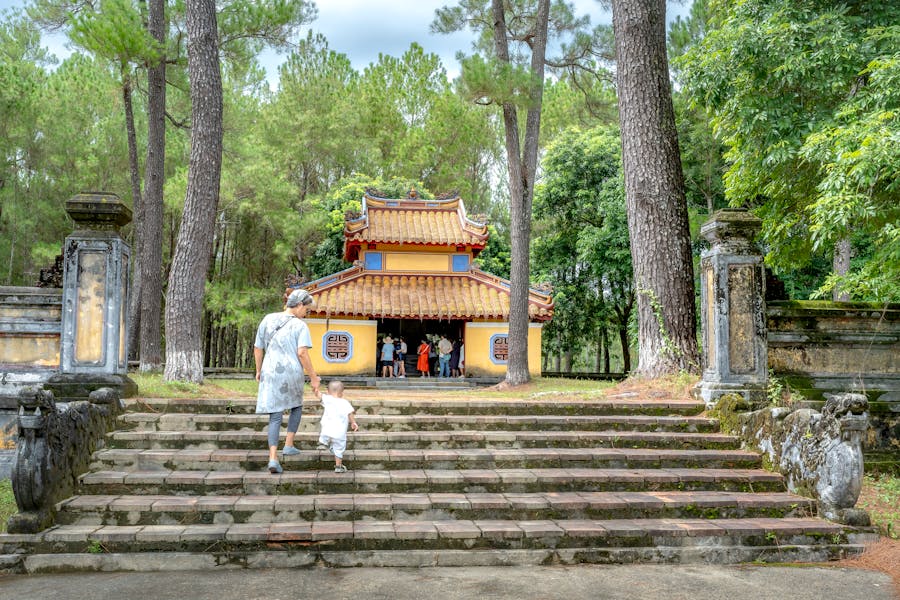
People often think sacred sites are about geography.
Ancient stones. Mountain monasteries. Pilgrimage roads. Churches carved from earth.
But I’ve learned something different.
Sacred sites are not ultimately about places.
They are about people.
Each sacred site I’ve visited has carried a human quality — not as a concept, not as philosophy — but as a lived experience that stayed with me long after I boarded the plane home.
The land may hold the energy.
But it is humanity that reveals the lesson.
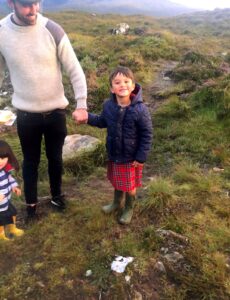 Scotland: Kindness
In Scotland, sacredness revealed itself through kindness.
It wasn’t in the ruins or the windswept cliffs.
It was in a small, tender moment.
I was crying — moved by something ancient and unspoken — when a little boy quietly placed his hand on my arm. He didn’t ask why. He didn’t try to fix anything. He simply stood there, steady and present.
That simple touch reminded me that gentleness still exists in the world — often where we least expect it.
Sacredness can look like a child who senses sorrow and responds with instinctive compassion.
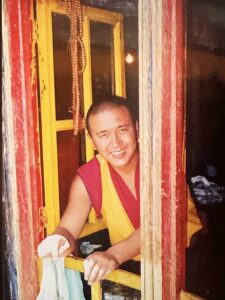 Tibet: Compassion
In Tibet, sacredness looked like compassion.
At the Jokhang Temple, as pilgrims circled the prayer wheels, an elderly Tibetan woman noticed I was struggling to keep pace. She was a pilgrim herself. Her journey was hard-earned.
Yet she paused.
She guided me through the prayer wheels and, without ceremony, placed her own prayer beads into my hands.
She had almost nothing.
Yet she gave without hesitation.
That is a kind of wealth no currency can touch.
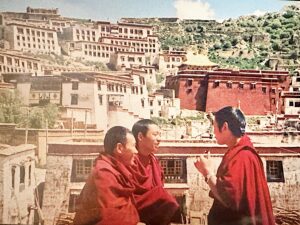
Compassion, I learned, is not an abstract virtue. It is an embodied offering.
 Spain: Clarity
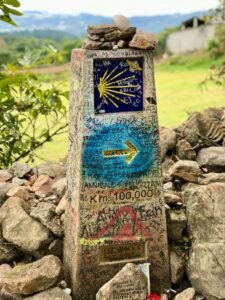
Walking El Camino de Santiago in Spain brought clarity.
Step after step, mile after mile, the noise began to fall away.
When you walk long enough with nothing to distract you — no schedule, no excess, no performance — what matters becomes obvious. And what doesn’t simply drops off.
Clarity doesn’t arrive with fanfare.
It arrives quietly, somewhere between blisters and sunrise.
The sacred site wasn’t just the cathedral at the end.
It was the road itself.
 Bhutan: Resilience
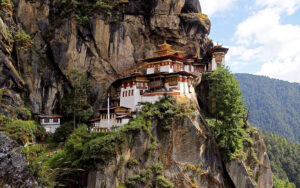
In Bhutan, the lesson was resilience.
Life there is not easy. The terrain is steep. The resources are few. And yet, what I saw was not struggle alone — it was rootedness.
I witnessed what it looks like to meet hardship with grace, humor, and an unshakable sense of meaning.
Resilience is not loud strength.
It is steady devotion.
It is continuing forward, anchored in something larger than comfort.
 Chimayó: Hope
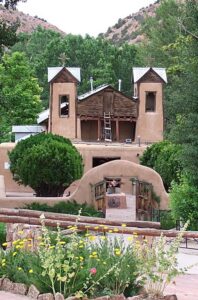
And in Chimayó, New Mexico — at the small dirt church where people come carrying pain and prayers — the quality was hope.
Not loud hope.
Not flashy hope.
But the quiet kind.
The kind that keeps people showing up year after year, leaving crutches, writing prayers, scooping handfuls of earth, believing that healing is possible.
Hope does not always change circumstances.
But it changes the heart of the one who believes.
The Reflection
That’s what sacred sites do.
They do not hand us answers.
They introduce us to parts of ourselves we may have forgotten.
Kindness.
Compassion.
Clarity.
Resilience.
Hope.
Sacred places reflect our humanity back to us.
And when we travel with open eyes and an open heart, we begin to understand:
We don’t just visit sacred sites.
We carry them.
Because the truest sacred ground is the human capacity to love, endure, forgive, see clearly, and believe again.
And that ground exists everywhere.
Are you wearing the best colors for you? Each of us has a power color based on the five elements and the day we were born. Sign up for my email list and provide me with the day, month, and year of your birth, and I will send you your birth element and power color!
Want more tips on creating a meaningful life? Subscribe to my YouTube Channel, Creating a Meaningful Life, and follow for more inspiration!