
40% of us will be diagnosed with cancer in our lives. So, if you don’t have cancer, I know you know someone who does. Here are nine tips for you or someone you love who goes through the cancer journey to recovery.
- Make sure the room has enough natural light. If not, bring in nature photos, and natural light bulbs.
- If they are in the hospital have a few personal items that are meaningful and make the person happy, but not too much. We don’t want clutter. With hospital things, medicines, etc., there is already a lot going on.
- Play the person’s favorite music. This creates flow in the room as well. We need movement or else we have stagnation. • Add an air filter. This adds movement as well and keeps the dust to a minimum too.
- Don’t use ceiling fans. The blades of the fan create a “cutting chi” over the person. Feel free to use an oscillating floor fan for circulation and to cool the person if needed.
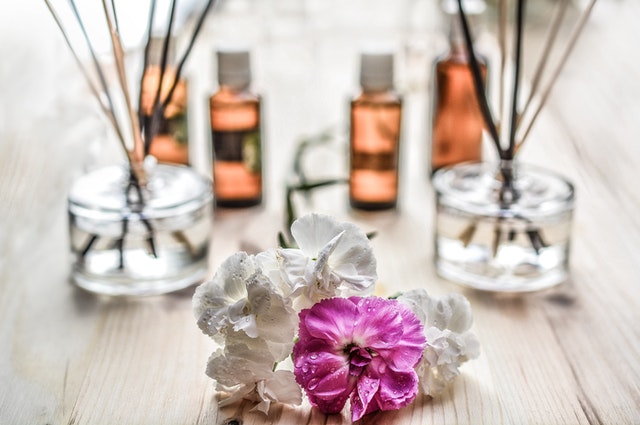
 Use healing aromatherapy oils. An oil diffuser is nice as it sends the scent into the air. You can turn it on or off as needed. Lavender is relaxing, Eucalyptus is energizing. Peppermint is good for congestion. You can ask the person what their favorite flower scent is and find that oil. I used rose.
 - If you’re loved one can be moved to another room occasionally, it’s a good idea to Smudge. This is a Native American ritual to get rid of negative energies. When one is sick, depression, anger, or sadness, can come up. Even people entering the room can bring this in. Sage is a dried herb and can be found online or at Whole Foods-type stores. You just light it, it sends out smoke. You wave it around the room like you are doing a cleansing. Make sure a door or window to the outside is open when doing this. It only takes a few minutes. When done, just put the smoke out and save the sage for another time. Do this on the same day you would be changing the bed sheets/linens and cleaning up the room.
- If you are the patient, then state an intention for what you desire. Read inspiring work, affirmations, or words that bring you to a happy place. “I am at peace where I am and I feel happy”, or “My body is healthy,” are some examples. See yourself where you want to be not where you are. Yes, be happy where you are as in gratitude but know that you can desire more and better.
- Have a picture or painting of something that makes you happy opposite your bed, so you see it when you wake up and when you go to bed. NO mirrors opposite the bed as they disturb nighttime chi.
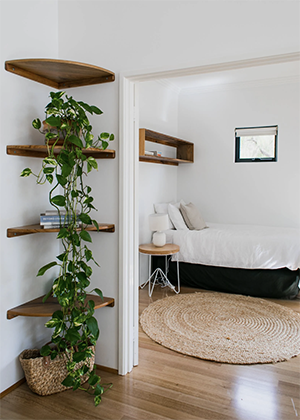
- Add natural plants with rounded leaves. Plants represent the Wood element which is growth. They are good for adding energy to a room and creating better health.
I have a medical mantra: You can believe the diagnoses but not the prognosis. I know these tips will help because they certainly helped me.
Have any Feng Shui questions? Feel free to contact me at michelle@michellecromer.com and sign up for your Power Color or visit me on Facebook at Michelle Cromer Feng Shui.
 I have noticed as I age, western medicine doesn’t seem to be as effective. For whatever reason, after I hit 50 I began to get all of those dreaded side effects printed on the warning labels of all the medication I was taking. But after a severe allergic reaction during a trip to India, an Indian doctor treated me with aromatherapy. For over two hours he applied essential oils, which seemed at the time, completely far-fetched. The treatment was labor-intensive, appeared imprecise and low-tech. But the treatment worked. The doctor explained that essential oils are multi-dimensional, filled with homeostatic intelligence that works to restore the body to a state of healthy balance. When body conditions change, oils adapt, raising or lowering blood pressure as needed, stimulating or repressing enzyme activity as needed, energizing, or relaxing as needed. “Oils possess an intelligence that we can’t comprehend,” he said. “Nature, Mother Earth does not need to read a textbook.”
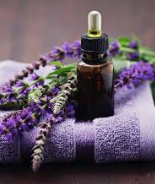 Rene Gatfosee, a French chemist, coined aromatherapy over a hundred years ago. He worked with volatile plant essential oils, developing fragrances for the perfume industry, until one day he had an explosion in his lab and was badly burned. He plunged his arm into the nearest vat of liquid, which happened to be lavender. To his amazement, the pain stopped immediately, and no blistering or scarring occurred. As a result, he changed his focus completely to the medicinal effects of these oils.
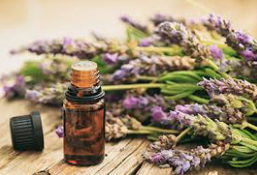 Utilizing the wisdom of plants and trees medicinally pre-dates written history. Early man, as a hunter-gatherer, must have sampled different plants to find out if they were edible and if so, what effects the plants had on the body. He would have learned quickly that some herbs bring on stupor, some enliven, others purge and of course, many nourish the body. A deep understanding and connection would have been formed between man and plant. As anyone who has lived close to the land soon learns, plants have a spirit of their own and can commune their intent if one is open enough to listen to their energetic frequency. In early times, man probably had a much keener awareness of his environment and worked more closely with the rhythms and vibrations of the earth. His sense of smell would be more honed, the odor entering the brain allowing him to intuit the efficacy of the plant by tuning into its vibration and sensing whether it would be a healthy fit for his body.
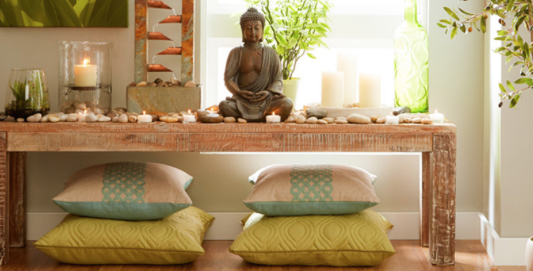 So often we label the rooms in our homes by what we do in them, the dining room, living room, the entertainment room, etc. Creating a meditation space gives you a place in your home or office that is dedicated to calm, silence, and stillness. Finding a moment of calm each day is important for our well-being and overall stress levels.
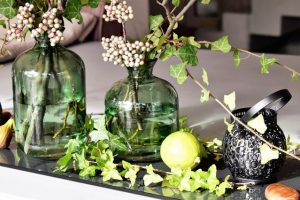 Layer beautiful aromas from essential oils, aromatic candles, or incense such as lavender, chamomile, and peppermint, which can soothe the soul, mind, and body.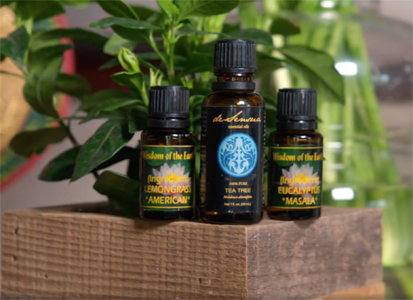
 In January 2020, as the Lunar New Year ushered in the Year of the Metal Rat in China, the coronavirus had already begun to spread, plunging China into chaos.
 Picture a see-saw. You are sitting in the middle of both sides completely balanced. Then someone jumps on one side and suddenly it tilts to one side, completely off balance. Now imagine that “someone” is the coronavirus. We all have this inner system of checks and balances. Approaching our emotions as symptoms allow us to understand our body from a different perspective – an energetic one.